
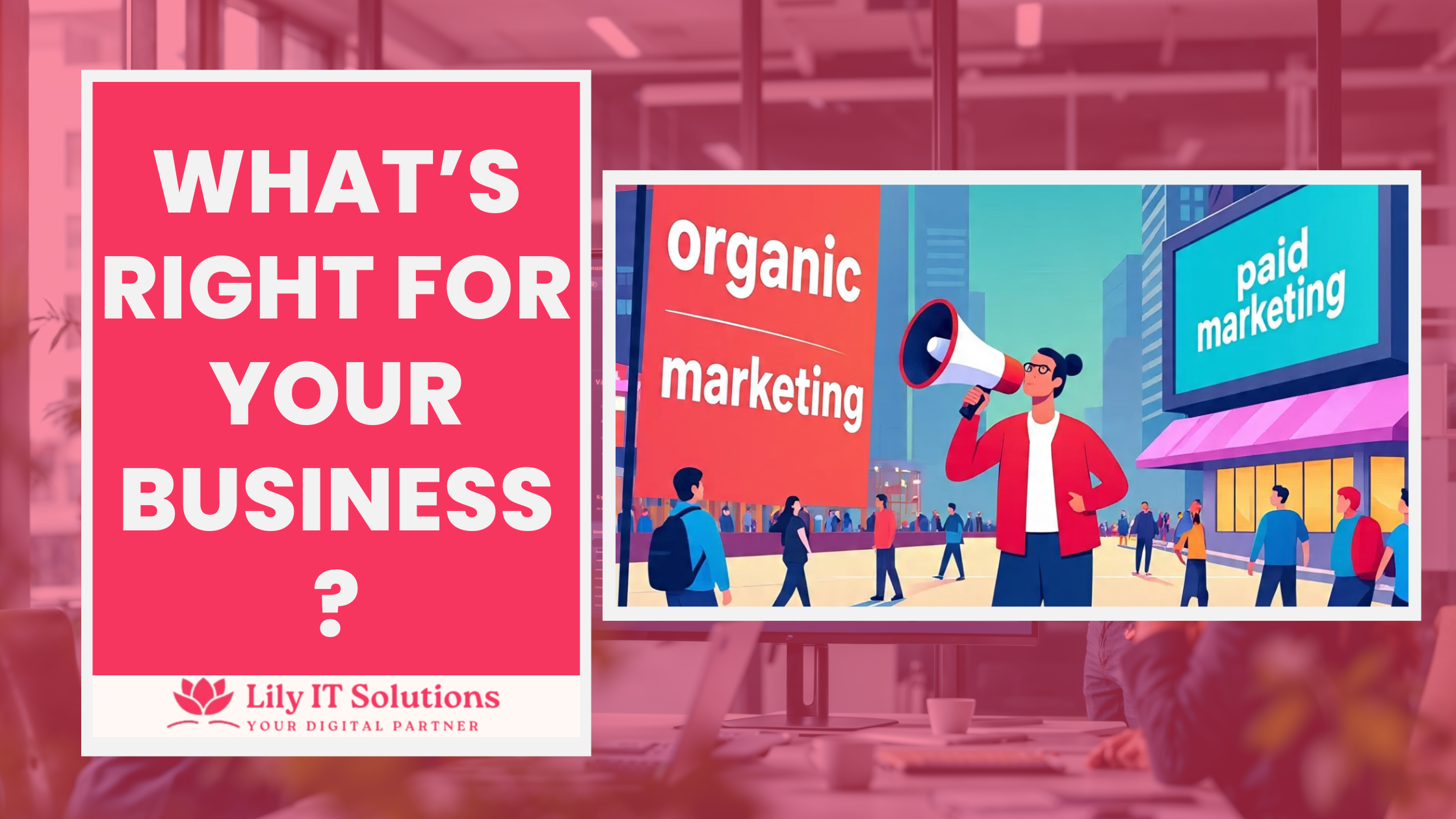
In today’s digital landscape, businesses face a crucial choice: should they invest in organic or paid marketing? Both approaches have unique advantages, costs, and timelines, and understanding them is vital for maximizing ROI, lead quality, and sustainable growth. In this blog, we’ll break down key differences, industry-specific insights, and actionable strategies to help you decide what works best for your business.
Understanding Organic Marketing
Organic marketing relies on non-paid channels such as SEO, content marketing, social media, and referrals. Its primary goal is to build audience trust and visibility over time. Unlike paid campaigns, organic strategies don’t require direct ad spend, but they do demand consistency and patience.
SEO and content marketing often take 3–6 months to deliver significant results, yet the benefits are long-lasting. A well-optimized blog or local listing can continue attracting traffic months or even years after it is published. In essence, organic efforts build lasting assets for your brand rather than temporary visibility.
Understanding Paid Marketing
Paid marketing includes PPC, display ads, social media ads, and sponsored content. The key advantage is immediate visibility. Ads can go live in hours, driving clicks and conversions almost instantly. This makes paid campaigns ideal for short-term goals such as promotions, product launches, or seasonal spikes.
However, the downside is that results stop when the budget ends. Paid campaigns require ongoing investment to maintain traffic, and cost-per-click (CPC) can be high in competitive markets.
ROI and Cost Comparison
When it comes to ROI, organic vs paid marketing shows a clear distinction in time horizon and efficiency:
-
Paid marketing: ROI is immediate but often limited. Paid channels typically deliver short-term ROI between 20–100%, depending on campaign effectiveness and competition.
-
Organic marketing: SEO and content marketing take time to scale but can yield long-term ROI of 150–500% once established.
For example, in local services like home trades, organic SEO has shown returns of $19.90 for every $1 spent, compared to only $4.40 per $1 for paid ads. This illustrates how investing in organic channels reduces customer acquisition costs (CAC) over time.
Lead Quality and Conversion
Organic channels tend to attract high-intent users. People who find your business through SEO or content marketing usually do research and trust your brand more. Across industries, organic traffic consistently converts better than paid:
-
Average search conversion: SEO ~2.4% vs paid search ~1.3%.
-
E-commerce: 1.6% organic vs 1.3% paid.
-
B2B SaaS: 2.1% organic vs 1.0% paid.
-
Local services (HVAC, plumbing): 3.3% organic vs 1.8% paid.
This data shows that organic leads often cost less and convert better, making them more sustainable in the long run.
Time to Results
Paid marketing delivers instant results, perfect for time-sensitive campaigns. A single ad can generate clicks and sales within hours.
Organic marketing, by contrast, requires patience. SEO and content marketing may take 3–6 months to gain traction. Yet once established, organic channels keep driving traffic without ongoing spend.
In short:
-
Paid = “traffic now, stops when budget ends.”
-
Organic = “slow start, builds evergreen traffic”.
Organic vs Paid Marketing in Ecommerce
E-commerce businesses face tight profit margins and high competition. Both organic and paid channels play essential roles:
-
Conversion Rates: Organic search slightly outperforms paid ads (~1.6% vs 1.3%).
-
ROI and CAC: Paid campaigns generate immediate sales but are costly per click. SEO and content reduce CAC and maximize long-term ROI. For instance, a $250k SEO investment could produce ~$823k profit versus ~$185k from paid ads.
-
Time: Paid ads work for spikes (holiday sales), but SEO continues compounding traffic after initial investment.
Summary: Organic channels deliver higher ROI and lower CAC in the long term, while paid ads offer immediate results. Most e-commerce businesses benefit from a blended approach, combining promotions with ongoing SEO and content strategies.
Organic vs Paid Marketing in SaaS (B2B Software)
- SaaS companies face long sales cycles and target professional buyers. Paid channels (LinkedIn Ads, Google Ads) deliver speed, whereas organic channels (SEO, content, webinars) foster trust and higher-quality leads.
-
Conversions: SEO conversion ~2.1% vs paid search 1.0%.
-
ROI and CAC: Organic-acquired customers have 25–30% lower CAC and 10–15% higher lifetime value than paid leads. Paid leads can be expensive (LinkedIn ~$408/lead, SEO ~$206/lead).
-
Time and Strategy: Paid campaigns fill the top of the funnel rapidly, while organic efforts nurture leads and build authority over months.
Summary: SaaS firms typically blend paid and organic, using paid to accelerate pipeline growth and organic for sustainable lead generation.
Organic vs Paid Marketing in Local Services
Local businesses such as contractors, plumbers, dentists, and retail stores benefit heavily from local SEO:
-
ROI & Cost: Organic SEO produces 19.9× ROAS, while paid ads yield 4.4×. CAC via SEO ~$126 vs ~$553 for paid ads.
-
Conversion: Local SEO ~3.3% vs paid ads 1.8%.
-
Sustainability: SEO continues generating leads with minimal maintenance, whereas paid campaigns stop when the budget ends.
- Local businesses should prioritize building a strong SEO foundation and use paid ads tactically for promotions or seasonal boosts.
Organic vs Paid Marketing in B2B (General)
B2B industries often require long sales cycles and trust-building.
-
Conversion & Leads: Organic search consistently converts 2–3× better than paid search (e.g., commercial insurance: 1.7% SEO vs 0.9% PPC).
-
Cost per Lead: Paid channels are expensive (LinkedIn ~$408, Google ~$463), whereas organic leads cost less (~$206 for SEO, referrals ~$25).
-
ROI: Organic builds credibility and pipeline, while paid accelerates engagement but can inflate CAC if overused.
Summary: A mixed strategy works best. Paid ads target accounts and scale quickly; organic marketing builds trust and cost efficiency over time.
Considering Business Stage
Startups and Early-Stage Companies:
-
Limited budgets favor rapid testing through paid campaigns.
-
Small-scale paid campaigns validate messaging, while organic efforts (SEO/content) build long-term foundation.
Mature Companies:
-
Established brands can invest heavily in both paid and organic channels.
-
SEO and thought leadership deliver compounding returns, while paid ads provide tactical boosts.
Conclusion:
Paid vs organic effectiveness evolves with business stage. Early on, paid campaigns drive quick results but higher CAC. Over time, organic marketing dominates in ROI, lead quality, and sustainability.
Actionable Takeaways
-
Evaluate your goals: Short-term revenue? Use paid campaigns. Long-term growth and trust? Invest in organic channels.
-
Blend strategies: Most businesses benefit from a combination of paid for immediate traction and organic for sustainable growth.
-
Focus on high-ROI channels: E-commerce and local services often gain more from SEO, while B2B startups may need paid campaigns for initial validation.
-
Monitor CAC and LTV: Track costs and lifetime value to adjust marketing spend efficiently.
-
Build assets: Content, blogs, and optimized listings continue attracting traffic long after initial investment.
Final Thoughts
Choosing between organic vs paid marketing isn’t a simple either/or decision. The right strategy depends on your industry, business stage, budget, and objectives. Paid marketing offers speed and precision, perfect for immediate results, promotions, or testing. Organic marketing, though slower, builds credibility, reduces long-term CAC, and generates evergreen traffic.
The optimal approach is often a strategic blend. Run targeted paid campaigns for quick wins while investing in SEO, content marketing, and social engagement to establish a lasting foundation. Over time, your organic channels can reduce dependence on paid spend and provide sustainable growth.
Start today: Audit your marketing channels, define your goals, and allocate resources wisely to balance immediate wins and long-term success.

 UK Ofice: